Drive Local Leads with Targeted Social Media Ads for Porta Potties
Portable sanitation business owners and marketers often wrestle with generating consistent, bookable leads from local event planners and construction managers. Targeted social media advertising is the solution, converting intent into contact through precise audiences and platform-specific creatives. This guide reveals how social media ads, especially on Facebook and Instagram, generate measurable leads and boost bookings for porta potty and restroom trailer rentals. We’ll cover ad formats, targeting strategies, creative best practices, budgeting, and measurement. You’ll discover which ad formats align with rental objectives, how to build custom and lookalike audiences for event planners and construction managers, and practical retargeting flows that boost conversion rates. The guide also outlines Instagram tactics for luxury restroom trailers, content calendar frameworks, and realistic CPL and ROAS calculations tailored to portable sanitation pricing. Following the tactical sections, you’ll find comparative tables of ad formats, budget scenarios, and advanced audience recipes, along with concise FAQs answering your most pressing questions. Strategic mentions of SEO for Porta Potties appear where a managed Social Media Marketing service can accelerate setup or provide an ROI audit.
How Can Facebook Ads Boost Leads for Porta Potty Rentals?
Facebook Ads supercharge leads for porta potty rentals by enabling hyper-local reach, precise interest and job-title layering, and streamlined conversion paths (lead forms or messages) that capture contact information without lengthy funnels. The process works in three key ways: pinpoint geo-targeting places your offers directly in front of event planners and site managers; ad formats like lead ads and messenger ads reduce friction for inquiries; and layered retargeting re-engages high-intent visitors to convert them into bookings. The tangible benefit is higher-quality inbound leads at measurable CPLs, which can be continuously optimized with creative rotation and audience refinement. Below, we compare common Facebook formats, their ideal use cases, and expected outcomes to help you select the right campaign type. Understanding these format-to-objective mappings will prepare you for the audience-building strategies that follow.
What Are the Best Facebook Ad Formats for Portable Toilet Rentals?

Each Facebook ad format addresses specific rental needs: single-image and carousel ads showcase inventory and pricing; video builds trust for restroom trailers; and lead forms capture inquiries without users leaving the platform. Single-image ads are ideal for urgent availability offers and typically drive higher CTRs for straightforward CTAs. Carousel ads allow you to display multiple unit types or add-on services within a single creative. Video ads (15–30 seconds) effectively demonstrate cleanliness, rapid setup, and crew professionalism, boosting engagement and time-on-ad metrics. Lead ads minimize friction for contact capture, often yielding the lowest CPL when paired with strong trust-building copy and localized targeting. Choose the format that best aligns with your objective: awareness (video/carousel), consideration (carousel/single image), and lead capture (lead ads/messenger).
Different Facebook ad formats perform best for specific objectives:
- Single-image ads are perfect for urgent availability promotions and local offers.
- Carousel ads excel at showcasing multiple unit types or add-ons.
- Video ads are ideal for building trust and highlighting luxury restroom trailers.
These format selections directly inform the targeting and creative themes we’ll discuss next.
| Ad Format | Best Use Case | Expected Outcome (lead type / CTR / CPL range) |
|---|---|---|
| Single Image | Urgent availability promotions and local offers | Quick inquiry leads / CTR 1–3% / CPL $15–$60 |
| Carousel | Showcase multiple unit types or add-ons | Consideration leads / CTR 1–2.5% / CPL $20–$75 |
| Video (short) | Demonstrate cleanliness, setup, and trailers | Engagement + trust leads / CTR 2–4% / CPL $25–$90 |
| Lead Form | Fast contact capture without redirect | Direct inquiries / CTR 0.8–2% / CPL $10–$50 |
| Messenger Ad | B2B outreach + qualification via chat | Qualified appointment requests / CTR 0.5–1.5% / CPL $30–$120 |
Before diving into targeting strategies, compare these formats with their expected performance to set realistic campaign expectations.
How to Target Event Planners and Construction Companies on Facebook?
Effectively targeting event planners and construction companies on Facebook requires a layered approach. Begin with job titles and interests as foundational elements, then seed custom audiences from your CRM or website visitors. Subsequently, apply lookalike audiences and geographic overlays to refine scale. For event planners, target interests like event planning pages, wedding planner groups, and venue-related behaviors. For construction, focus on job titles (site manager, project manager), industry trade publications, and company size indicators. Combine these with radius targeting around venues, stadiums, or known construction zones to prioritize likely demand. Exclude low-intent audiences (broad consumer segments) and implement dayparting for ad delivery during business hours to increase contact rates. These precise targeting recipes generate high-quality prospects that can be funneled into lead forms or message-based qualification flows.
What Are Effective Facebook Ad Creatives for Porta Potty Businesses?
Effective Facebook creatives for porta potty businesses highlight cleanliness, availability, and local responsiveness, incorporating trust signals to reduce booking friction. Visual themes should feature clean interiors, branded trailers at events, and crew members performing cleaning services to convey professionalism. Ad copy should pair urgency (“Available this weekend”) with local specificity (“Serving [city radius] venues”) and a clear call to action (“Get a fast quote”). Trust elements like sanitation icons, brief testimonials, and fleet size numbers boost conversion rates when prominently displayed in image overlays or the opening seconds of a video. Keep videos under 30 seconds with a compelling hook in the first 3 seconds and a clear CTA in the final frame to maximize completion and follow-up actions.
How to Use Retargeting Campaigns to Capture Portable Toilet Leads?
Retargeting campaigns re-engage visitors who have shown intent (e.g., viewed pricing, visited the contact page, or engaged with an ad) with tailored messages designed to reduce friction and drive bookings. Implement the Meta pixel or conversion API and segment audiences by behavior: page viewers, form abandoners, and high-engagement video viewers. Sequence ads over 7–14 days—initially showcasing social proof, followed by an availability reminder, and then a limited-time offer—to guide prospects toward conversion. Apply frequency caps and creative rotation to prevent ad fatigue, and use exclusion lists for recent bookers to conserve budget. This approach typically reduces CPL by 20–50% compared to cold prospecting when properly sequenced and tracked.
How to Measure Facebook Ads ROI for Porta Potty Rentals?
Measuring Facebook Ads ROI for porta potty rentals involves tracking leads, attributing booking revenue, and calculating CPL and ROAS against actual rental margins. Essential tracking includes UTM-tagged landing pages, the Meta pixel (or conversion API), and CRM integration to mark leads that convert into booked jobs. Calculate CPL by dividing ad spend by confirmed leads, and ROAS by dividing revenue attributable to ads by ad spend; always include delivery and labor costs in revenue calculations for accurate margins. Report weekly on leads and CPL, and monthly on bookings and ROAS. Utilize cohort analysis to determine the lifetime booking value of repeat customers. Accurate measurement provides the data needed for optimization decisions to scale winning audiences and pause underperformers.
After establishing this measurement framework, consider professional managed support to accelerate setup and optimization. SEO for Porta Potties offers Social Media Marketing services, including Facebook Ads setup, audience targeting, and retargeting, as a comprehensive solution. They can also provide a free consultation to map out initial audience strategies and lead flow.
What Are the Key Instagram Marketing Strategies for Portable Restrooms?
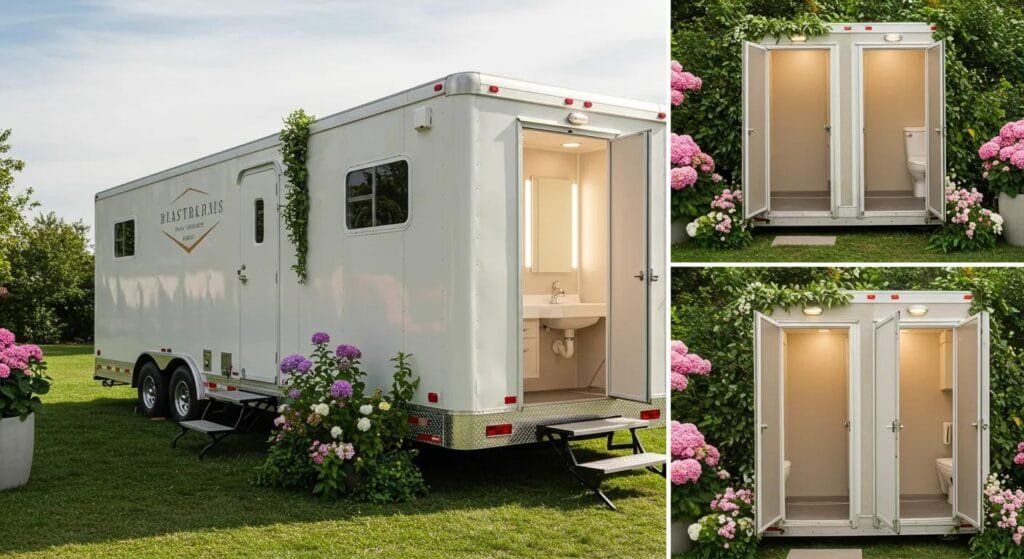
Instagram marketing for portable restrooms capitalizes on visual storytelling to showcase luxury restroom trailers and build brand awareness through short-form video, carousel galleries, and targeted Stories. The core mechanism is visual persuasion: high-quality imagery and Reels communicate cleanliness, comfort, and event suitability, driving discovery among event planners and local audiences. Instagram is particularly effective for premium offerings and brand differentiation because its format rewards creativity and local discovery via hashtags and location tags. Below, we outline formats, content creation tips, and targeting tactics to transform Instagram engagement into bookable leads.
Which Instagram Ad Formats Work Best for Restroom Trailers?
Instagram Reels, Stories, and carousel ads each serve different stages of the marketing funnel for restroom trailers. Reels are ideal for discovery and engagement; Stories are perfect for rapid inquiry with CTAs and swipe-up actions; and carousel ads allow for detailed feature showcases. Reels featuring short before-and-after clips or setup speed montages can increase profile visits and saves. Stories with interactive stickers and direct CTAs drive immediate messages or lead form submissions. Carousel ads enable you to highlight multiple trailer features—such as interior finishes, lighting, and added amenities—helping planners assess suitability. Choose your format based on your objective: use Reels for awareness, Stories for quick contact, and carousels for consideration.
How to Create Engaging Visual Content for Instagram Ads?
Creating engaging Instagram content for portable sanitation businesses centers on short, story-driven videos, polished imagery, and captions that emphasize benefits like hygiene, rapid delivery, and on-site professionalism. Develop a shot list that includes exterior branded shots, close-ups of clean interiors, and images of attendants performing cleaning protocols to build trust. Keep Reels to 15–30 seconds with a strong opening hook and a clear CTA. Captions should be concise, utilizing location tags and 6–10 relevant hashtags for local reach. Repurpose longer testimonial videos into 15-second clips for ads and use carousel copy to explain features in easily digestible bullet points. High-quality visuals enhance engagement and reduce CPL when amplified through paid promotion.
How to Target Local Audiences and B2B Segments on Instagram?
Target local audiences on Instagram using radius targeting around venues and event hubs, demographic overlays for business owners or managers, and interest targeting aligned with event planning and construction. For B2B segments, pair sponsored posts with outreach to local event pages and utilize Instagram DMs or promoted messages to initiate conversations with planners. Saved audiences combining geography, industry-related interests, and recent engagement with event pages help scale targeted reach. Collaborations with local influencers or venue partners can also expand visibility among decision-makers and can be amplified through small boosted campaigns for improved local discovery.
How Can Instagram Ads Enhance Brand Awareness for Porta Potty Rentals?
Instagram ads enhance brand awareness by amplifying storytelling content—such as behind-the-scenes maintenance, customer testimonials, and setup timelapses—that positions a company as reliable and professional. Use organic Reels to test messaging, then promote top-performing content to a broader local audience for increased reach and profile visits. Showcase luxury restroom trailers with lifestyle shots and leverage user-generated content (UGC) from event hosts to demonstrate real-world use. Measurable goals include engagement rate, profile visits, and share counts; strong performance in these areas often leads to a rise in inbound inquiries and direct messages from event planners. Amplifying authentic content makes your brand the go-to choice for local bookings.
What Metrics Should You Track to Optimize Instagram Campaigns?
Track metrics that directly link engagement to conversions: Reels saves/shares, story swipe-ups or messages, website clicks, leads (via lead forms), and ultimately, CPL. Prioritize engagement and conversion metrics differently: use engagement rate and saves to identify content worth amplifying, and use link clicks and leads to measure direct campaign performance. Conduct A/B tests on creative hooks and CTAs, and allocate budget to creatives demonstrating the best CPL and conversion rate to booked jobs. Use monthly reporting to connect Instagram activity to booked revenue and adjust your content calendar and paid amplification strategies accordingly.
What Is the Best Social Media Advertising Strategy for Portable Toilet Businesses?
The optimal social media advertising strategy for portable toilet businesses is integrated: select platforms based on your target audience and product, run coordinated prospecting and retargeting campaigns, and align organic content with paid creatives to maximize local conversion. The underlying mechanism is cross-channel consistency—when social ads, local SEO, and paid search share landing pages and messaging, conversion rates improve because users encounter the same offer across multiple touchpoints. The specific benefit is a higher capture rate of high-intent leads and more efficient ad spend through shared audiences and attribution. Below are practical platform selection guidelines, a content calendar approach, and integration tactics for reputation management and local discovery.
How to Choose the Right Social Media Platforms for Porta Potty Marketing?
Select Facebook and Instagram as your primary platforms for local reach and visual storytelling. Consider LinkedIn selectively for B2B outreach to larger construction firms or municipal procurement contacts. Facebook is well-suited for broad prospecting and lead forms; Instagram excels at amplifying premium restroom trailer visuals; LinkedIn is effective when targeting high-value commercial contracts. Allocate time and budget based on expected yield: prioritize Facebook for lead volume, Instagram for brand building and higher-value trailer rentals, and LinkedIn for enterprise outreach. This platform mix supports both immediate lead capture and long-term relationship building.
How to Develop a Consistent Content Calendar for Social Media?
A content calendar organizes posting cadence, content pillars, and repurposing efforts to ensure consistency and supply your ads with fresh organic assets. Utilize three main content pillars—showcasing units, highlighting trust & hygiene, and sharing customer stories—and plan for 2–3 posts per week, mixing Reels, carousels, and testimonial posts. Repurpose long-form testimonial or setup videos into short ads and Stories, and schedule paid amplification for your top-performing organic posts. Monitor content performance weekly and rotate creative based on engagement, which feeds your ad library and reduces creative production time while keeping messaging current.
How to Engage Communities and Manage Reputation on Social Media?
Engage communities by responding promptly to comments and messages, actively soliciting reviews after service, and strategically using testimonials in both ads and organic posts to build trust. Establish response templates for positive feedback, constructive replies for complaints, and an escalation workflow for urgent issues. Encourage reviews through post-service follow-ups and highlight high-quality reviews in carousel ads or pinned posts. Timely, transparent responses convert passive followers into loyal customers and provide valuable UGC for future campaigns.
How to Integrate Social Media Ads with Local SEO and Paid Ads?
Integration requires consistent landing pages, shared audiences, and coordinated reporting so that social ads, local SEO, and Google Ads promote the same offers and track conversions uniformly. Leverage remarketing lists from paid search to target high-intent visitors on social platforms, and ensure landing pages mirror the CTAs and location information used in local SEO listings. Shared KPIs—leads, CPL, and booked conversions—enable cross-channel attribution and budget reallocation to the most efficient channels. This integrated approach minimizes wasted spend and maximizes total booked jobs from combined marketing efforts.
To highlight a key differentiator, SEO for Porta Potties offers an integrated digital marketing service that combines Social Media, Local SEO, and Paid Ads. They operate with an exclusivity policy (One Business Per Area) to safeguard local market integrity. Prospective clients can request a consultation to review campaign blueprints and projected lead increases of 10–30%+ based on campaign optimization and integration with local search efforts.
How to Budget and Measure ROI for Social Media Ads in Porta Potty Rentals?
Budgeting and measuring ROI for social media ads involves establishing realistic monthly budget ranges, understanding expected CPLs per campaign type, and implementing tight attribution from lead to booking to accurately calculate ROAS. The core mechanism is iterative testing: begin with modest prospecting budgets to identify effective audiences, then reallocate spend towards retargeting and high-performing creatives. The benefit is predictable lead flow with controllable CPLs and data-driven scaling decisions. Below is a table outlining typical campaign types, budgets, and expected CPLs to guide your planning and reporting cadence.
What Is the Typical Cost of Facebook and Instagram Ads for Porta Potty Businesses?
Typical costs fluctuate based on market competitiveness and seasonality. In smaller towns, CPLs tend to be lower due to less competition, while metro areas often experience higher CPLs, particularly during peak event seasons. Prospecting campaigns in low-competition areas can yield leads in the $15–$45 CPL range, whereas metro prospecting might reach $40–$120. Retargeting campaigns typically halve those CPLs. Seasonality also plays a role—weekends, festival seasons, and construction booms increase demand and can drive up CPAs. Use these cost ranges to model monthly spend and forecast expected lead volumes based on your operational capacity and conversion rates.
Next, we provide a budgeting table with campaign types and recommended KPIs to help you plan your spend and expected outcomes.
| Campaign Type | Budget Range (per month) | Expected CPL | Recommended KPI |
|---|---|---|---|
| Prospecting (local) | $500–$1,500 | $15–$60 | Leads per week, CTR |
| Retargeting (website/video) | $300–$800 | $8–$40 | CPL, conversion rate |
| Brand Awareness (trailers) | $300–$1,200 | N/A (CPM-focused) | Reach, engagement rate |
| B2B Outreach (LinkedIn/Facebook) | $600–$2,000 | $30–$150 | Qualified leads, meetings booked |
How to Calculate Cost Per Lead and Return on Ad Spend?
Calculate CPL by dividing total ad spend by the number of confirmed leads within the measurement window. Calculate ROAS by dividing revenue attributable to ads by ad spend. For instance, if you spend $1,200 in a month and generate 40 leads, your CPL is $1,200 / 40 = $30. If 10 of those leads convert to bookings averaging $600 in revenue each, your total revenue is $6,000, and your ROAS is $6,000 / $1,200 = 5.0 (or 500%). Remember to include delivery and labor costs when assessing net profitability to ensure campaigns are generating positive margins. These formulas are crucial for making clear scaling decisions based on your capacity and the value of each booking.
What Are the Key Performance Indicators for Social Media Success?
Key performance indicators (KPIs) include lead volume, CPL, booking conversion rate from leads, revenue per booking, and ROAS. Secondary metrics such as CTR, engagement rate, and cost per click are also important. Monitor leads and CPL weekly to manage spend effectively, and measure booking conversion rates monthly to validate campaign impact. Establish action triggers: pause audiences with a CPL above your target or scale creatives demonstrating a low CPL and high conversion rates. Maintain a shared dashboard to align marketing and operations on capacity and lead handling processes.
How to Optimize Ad Spend for Maximum Lead Generation?
Optimize ad spend by allocating 60–70% to prospecting to maintain a consistent funnel flow and 30–40% to retargeting to convert warm audiences, adjusting these percentages based on observed CPL and conversion rates. Utilize A/B testing for creatives and headlines, refresh creatives every 2–4 weeks, prune underperforming audiences, and employ automated rules for bid caps and pausing campaigns. Test different bid strategies—lowest cost for broad reach and scale, target cost for predictable CPL—and implement frequency caps on retargeting campaigns. A disciplined experimentation roadmap and a robust creative library are essential for improving long-term CPL and ROI.
How to Craft Effective Social Media Ad Creatives for Porta Potty Rentals?
Effective ad creatives communicate sanitation, availability, and local reliability through compelling visuals, concise copy, and social proof that quickly reduces buyer uncertainty. The mechanism is trust-building via imagery and messaging: clean interiors, branded trailers, and testimonial overlays foster confidence, while clear CTAs drive immediate contact. Creatives that combine urgency (“Weekend availability”) with specificity (local radius) and a clear CTA consistently yield higher conversions. Below are practical visual and copy techniques, along with strategies for repurposing content and leveraging UGC to sustain creative output.
What Visual Elements Showcase Cleanliness and Reliability?
Visuals that effectively showcase cleanliness and reliability include close-ups of spotless interiors, images of attendants performing sanitation checks, branded trailers staged at actual events, and certification-like badges for cleaning protocols. Use bright, natural lighting and tight compositions to emphasize hygiene. Include captions that state cleaning frequency and rapid delivery times; overlay simple trust badges on images to mitigate skepticism. High-quality images enhance engagement and support lower CPLs when replicated across ads and organic posts.
How to Write Compelling Ad Copy with Strong Calls to Action?
Compelling ad copy employs proven formulas like Problem-Agitate-Solve and Feature-Benefit-CTA to convert both urgent and planned rental buyers. For urgent needs, use succinct CTAs like (“Need units this weekend? Get a quote now”). For scheduled projects, emphasize reliability (“On-time delivery for multi-day sites”). Keep headlines under 10 words and descriptions under 20 to maintain ad clarity. Test urgency-focused versus trust-building copy to determine what resonates best with event planners versus construction managers.
How to Use Before-and-After and Behind-the-Scenes Content?
Before-and-after and behind-the-scenes content demonstrate sanitation practices and deployment efficiency, transforming abstract promises into concrete proof. Produce short sequences showing a unit pre-cleaning, during the cleaning process, and staged for delivery; these sequences, repurposed as 15–30 second Reels or Stories, significantly enhance credibility. Behind-the-scenes clips of loading and logistics highlight professionalism and can be trimmed into short ads that address common buyer concerns about hygiene and timing. Repurpose longer clips into concise testimonials and social proof assets for ad rotations.
How to Leverage User-Generated Content and Testimonials?
Leverage UGC by requesting event hosts or site managers to share photos in exchange for small incentives, then amplify top posts as paid ads with their explicit permission. Use a simple outreach template requesting permission and a brief caption; maintain a permissions log for legal clarity. Incorporate short customer quotes into carousel cards or overlay them on video frames to combine social proof with visual evidence. UGC often delivers higher trust and a lower CPL because it reflects authentic, real-world use.
What Are Advanced Targeting Techniques for Porta Potty Social Media Ads?
Advanced targeting techniques combine custom audiences, lookalikes, geo-fencing, demographic overlays, and sequence-based retargeting to reach decision-makers efficiently and convert them. The mechanism is precision: seed high-quality data sources to create lookalikes, geo-fence key venues, and layer job titles or industry interests to isolate planners and managers. The advantage is higher relevance and lower CPL because ads are shown only to users most likely to convert. Below is a practical audience table featuring targeting recipes for common high-value segments.
How to Build Custom and Lookalike Audiences on Facebook?
Build custom audiences from CRM lead lists, high-intent website visitors, and video engagers. Then, create lookalike audiences at 1–3% to scale reach while preserving audience similarity. Seed lookalikes with customers who booked in the past 12 months and exclude recent bookers to prevent wasted ad spend. Combine lookalikes with geo overlays (city or radius) and interest filters to ensure local relevance. Monitor audience sizes and refresh your seed data quarterly to capture new booking patterns. Properly seeded lookalikes often outperform broad interest targeting for conversion-focused campaigns.
How to Target Event Planners and Construction Managers Effectively?
Target event planners using interest signals (wedding planning, event management), page admins of venue pages, and attendance behaviors near local event listings. For construction managers, utilize job titles (site manager), industry interests (construction equipment, contractors), and company size filters. Combine these inputs with CRM lookalikes and exclusions for irrelevant consumer groups. Use messenger or lead form creatives that emphasize rapid quotes and delivery windows, which resonate strongly with planners and site managers. Cross-channel outreach (paired LinkedIn ads for enterprise prospects) can enhance outreach to high-value commercial accounts.
How to Use Geographic and Demographic Filters for Local Leads?
Employ radius targeting around venues and construction clusters, DMA targeting for metropolitan campaigns, and zip-level focus for precise local offers. Overlay demographic filters like business owner age or managerial status to prioritize decision-makers. Avoid overlapping radii that can cannibalize audiences and apply time-of-day bid adjustments for optimal business-hour delivery. Geo-fencing near event venues or large construction sites can capture on-site decision-makers and boost immediate inquiries. These geographic filters reduce wasted impressions and elevate the quality of local leads.
How to Retarget Website Visitors and Past Leads?
Segment website visitors by behavior—viewed pricing page, visited contact page, or started a quote form—and set retargeting windows (7–14 days for pricing viewers, 30–90 days for past leads) with tailored ad sequences: reminder → social proof → limited offer. Rotate creatives every test cycle, cap frequency to avoid ad fatigue, and include escalating CTAs (from “Learn More” to “Get a Quote” to “Call Now”). Re-engage past leads with upsell propositions like trailer upgrades or multi-day discounts. This sequenced approach improves conversion rates by addressing intent and timeliness.
| Target Audience | Attributes (job titles/interests/behaviors) | Example Targeting Logic |
|---|---|---|
| Event Planners | Wedding planner, event organizer, venue admin, interest in local event pages | Seed with CRM event customers, create 1% lookalike, radius 25 miles around venues |
| Construction Managers | Site manager, project manager, construction company, equipment interest | Job title + company size filter, exclude consumer interests, daypart during business hours |
| Local Businesses | Business owners, facility managers, hospitality managers | Interest + local radius 10–30 miles, retarget previous website visitors who viewed pricing |
What Are Common FAQs About Social Media Advertising for Porta Potty Rentals?
Common FAQs address platform choice, ROI measurement, budgeting, posting cadence, and best practices for Facebook lead capture. Concise answers help potential clients decide quickly and take action. The mechanism of FAQ optimization is to provide short, actionable responses that address search intent and encourage follow-up actions. The benefit is increased organic visibility in “People Also Ask” boxes and faster user decisions that can convert to consultations or managed services. The following short Q&A items offer focused guidance and suggest next steps.
How Can Porta Potty Businesses Use Facebook Ads Effectively?
Porta potty businesses can use Facebook Ads effectively by prioritizing localized targeting, selecting lead forms or messenger for low-friction contact capture, and pairing ad creatives with trust signals like sanitation badges and testimonials. Begin with a modest prospecting budget to identify working audiences, then allocate more spend to retargeting to reduce CPL. Integrate ad leads into a CRM to track true bookings and optimize toward ROAS and booking conversion. Consistent tracking and creative testing are crucial for reliable scaling.
Which Social Media Platforms Are Best for Portable Toilet Advertising?
Facebook and Instagram are primary platforms for local reach, visual promotion, and lead capture. LinkedIn can be effective for enterprise B2B outreach to construction firms or municipal buyers. Use Facebook for volume-focused prospecting and lead forms, Instagram for premium trailer storytelling and influencer partnerships, and LinkedIn for direct outreach when targeting procurement or project managers. Prioritize platforms based on your product (standard porta potties vs. luxury restroom trailers) and target audience.
How to Measure the ROI of Social Media Ads for Porta Potty Rentals?
Measure ROI by tracking leads from ads into a CRM, assigning booking value, and calculating CPL and ROAS: CPL = Ad Spend / Leads; ROAS = Revenue from Ad-Attributed Bookings / Ad Spend. Include delivery and labor costs in revenue calculations to determine net profitability. Use UTM parameters and CRM lead tags to maintain reliable attribution and conduct monthly cohort analysis to understand the long-term booking value per channel.
What Budget Should I Set for Social Media Advertising?
Set budgets in tiered levels: Starter ($500–$1,000/month) to validate audiences in smaller markets, Growth ($1,500–$4,000/month) for sustained lead flow in metro regions, and Scale ($4,000+/month) for multi-location operations or aggressive market capture. Adjust based on observed CPL and booking capacity; prioritize retargeting once prospecting yields reliable traffic. Refer to the budgeting table above to align your spend with expected outcomes.
How Often Should I Post on Social Media to Engage My Audience?
Post 2–3 times per week, incorporating a mix of promotional content, behind-the-scenes glimpses, and testimonials to maintain engagement without oversaturating your followers. Repurpose top-performing organic posts into paid ads and schedule content around local event calendars and construction seasonality. Consistent posting cadence and content repurposing reduce production workload while keeping your ad library fresh.
Following these FAQs, if you require an expert audit or a sample budget plan, SEO for Porta Potties offers budgeting and ROI optimization services. They can provide a complimentary audit or sample budget plan to help prioritize campaigns and forecast CPLs.
SEO for Porta Potties specializes in Social Media Marketing (Facebook Ads & Instagram Ads) for the portable sanitation niche. Their integrated digital marketing offering combines Social Media, Local SEO, and Paid Ads with an exclusivity policy (One Business Per Area) to protect local market integrity. Prospective clients can request a consultation to review campaign blueprints and projected lead increases of 10–30%+ based on campaign optimization and integration with local search efforts.
Frequently Asked Questions
What are the benefits of using Instagram for porta potty marketing?
Instagram offers a visually-driven platform ideal for showcasing luxury restroom trailers and engaging potential clients through high-quality imagery and videos. The platform’s features, such as Stories and Reels, allow businesses to create compelling narratives around cleanliness and service quality. Additionally, Instagram’s targeting capabilities enable businesses to reach local event planners and construction managers effectively. By leveraging hashtags and location tags, companies can enhance their visibility and attract a more relevant audience, ultimately leading to increased inquiries and bookings.
How can I improve my ad targeting on Facebook for porta potty rentals?
Improving ad targeting on Facebook involves using a combination of custom audiences, lookalike audiences, and detailed demographic filters. Start by creating custom audiences from your existing customer database or website visitors. Then, generate lookalike audiences to reach new users similar to your best customers. Additionally, layer targeting options such as job titles, interests related to event planning or construction, and geographic filters to ensure your ads reach the most relevant decision-makers. Regularly analyze performance data to refine your targeting strategy over time.
What types of content should I include in my social media posts?
Your social media posts should include a mix of promotional content, behind-the-scenes glimpses, customer testimonials, and educational material about the benefits of your services. Highlighting cleanliness and reliability through visuals and storytelling can build trust with potential clients. Additionally, sharing user-generated content from satisfied customers can enhance credibility. Regularly updating your content calendar with seasonal promotions or local events can also keep your audience engaged and informed about your offerings.
How can I measure the success of my social media advertising campaigns?
To measure the success of your social media advertising campaigns, track key performance indicators (KPIs) such as lead volume, cost per lead (CPL), and return on ad spend (ROAS). Use tools like UTM parameters to attribute leads to specific campaigns and monitor conversion rates from leads to bookings. Regularly review engagement metrics, such as click-through rates (CTR) and social interactions, to assess the effectiveness of your ad creatives. Monthly reporting can help identify trends and inform future campaign adjustments.
What are some common mistakes to avoid in social media advertising for porta potties?
Common mistakes in social media advertising for porta potties include poor targeting, lack of compelling visuals, and insufficient tracking of campaign performance. Failing to define a clear audience can lead to wasted ad spend on irrelevant users. Additionally, using low-quality images or generic messaging can diminish engagement. Not implementing tracking mechanisms to measure ROI can hinder your ability to optimize campaigns effectively. Regularly reviewing and adjusting your strategy based on performance data is crucial for long-term success.
How often should I refresh my ad creatives?
Refreshing your ad creatives every 2 to 4 weeks is recommended to prevent ad fatigue and maintain audience engagement. Regular updates help keep your messaging fresh and relevant, which can improve click-through rates and conversion rates. Consider A/B testing different visuals, headlines, and calls to action to identify what resonates best with your audience. Additionally, rotating in user-generated content or seasonal promotions can provide new angles and maintain interest in your offerings.
Conclusion
Implementing targeted social media advertising for porta potty rentals can significantly enhance lead generation and booking rates by reaching the right audiences with tailored messaging. By leveraging platforms like Facebook and Instagram, businesses can showcase their offerings effectively while optimizing for cost-per-lead and return on ad spend. Engaging with potential clients through strategic ad formats and retargeting campaigns ensures a steady flow of qualified leads. Start optimizing your social media strategy today to unlock the full potential of your portable sanitation business.